History
Housing for the Aged Action Group

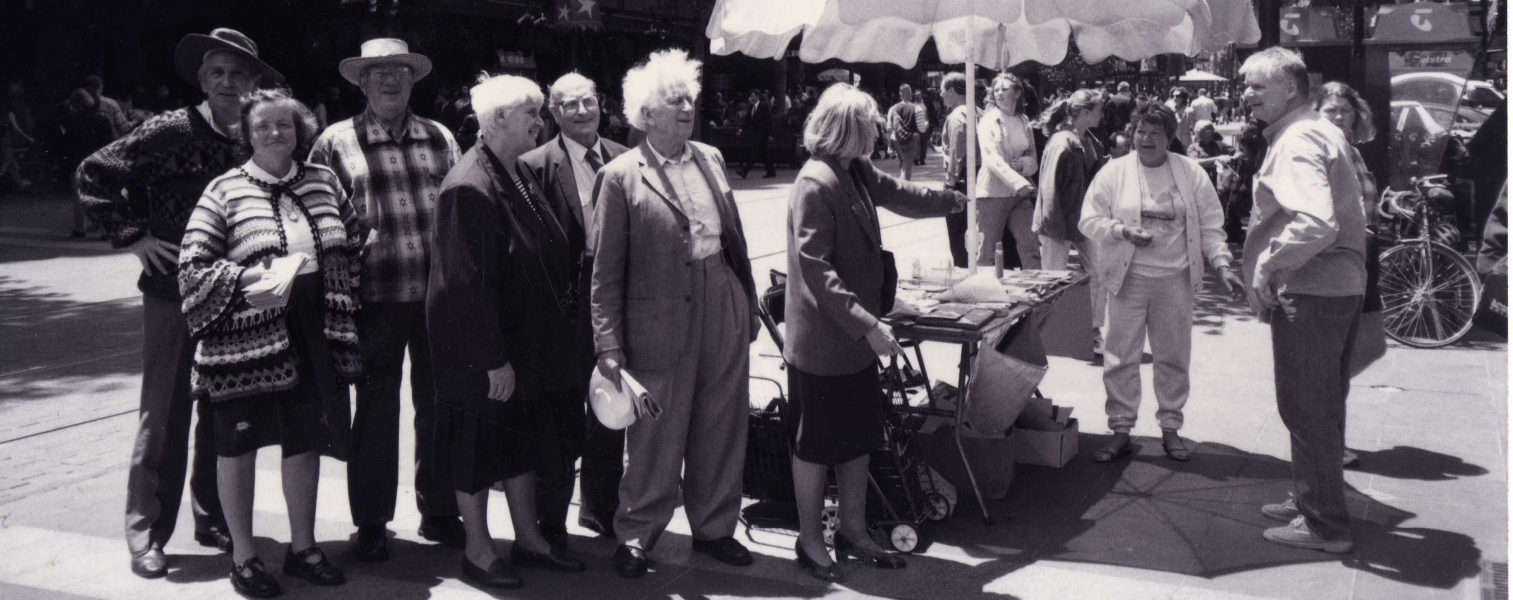
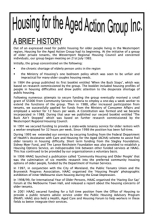
1983 Out of an expressed need for public housing for older people living in the Westernport region, Housing for the Aged Action Group had its beginning. At the initiative of a group of older private tenants, the Westernport Regional Housing Council and concerned individuals, our group began meeting on 21st July 1983. Initially, the group concentrated on the chronic shortage of elderly person units in the region and the Ministry of Housing’s one bedroom policy which was seen to be unfair and impractical for many older couples housing needs.
1984 The group published its first booklet entitled ‘When the Buck Stops’, which was based on research commissioned by the group. The booklet included housing profiles of people in housing difficulties and drew public attention to the desperate shortage of public housing.
1988 Following numerous attempts to secure funding the group eventually received a small grant of $5000 from Community Services Victoria to employ a one-day a week worker to extend the functions of the group. Then in 1988, after increased participation from tenants, we successfully applied for funds from the Ministry of Consumer Affairs and employed a worker for 12 hours per week. A Constitution was formed and we became incorporated in 1988. During that year we published our second booklet entitled ‘The Buck Ain’t Stopped’ which was based on further research commissioned by the Westernport Regional Housing Council.
1991 HAAG secured funding to provide a state-wide tenancy service for older renters. HAAG lost its tenancy funding in 2016 when the Retirement Housing Advocacy program commenced, and regained its tenancy funding in 2024 under the Rental Stress Support program.
1995 We extended our services by securing funding from the Federal Department of Health’s Assistance with Care and Housing for the Aged (ACHA) scheme to assist frail older tenants in housing difficulty. Short term funding from the Stegley Foundation, Sidney Myer Fund, and The Lance Reichstein Foundation was also provided to establish a Housing Options Service, an indispensable link between other funded services at HAAG. This has continued to be provided by our organisation.
1996 HAAG launched a publication called ‘Community Housing and Older People’ that was the culmination of six months research into the preferred community housing options of older people, funded by the Department of Human Services.
1997 In conjunction with the City of Moreland, the Public Tenants Union and the Brunswick Progress Association, HAAG organised the ‘Housing People’ photographic exhibition of inner Melbourne slum housing during the Great Depression.
1998/99 For International Year of Older Persons, HAAG organised the ‘Having Our Say’ Forum at the Melbourne Town Hall, and released a report about the housing concerns of older tenants.
2001 HAAG secured funding for a full time position from the Office of Housing to provide a public tenants advice service under the Public Housing Advisory Program (PHAP). HAAG also held a Health, Aged Care and Housing Forum to help workers in these fields to better integrate their services.
2002 HAAG organised another successful statewide forum called Having Our Say 2002 which is part of a strategy to develop a Rural and Regional Older Tenants Network.
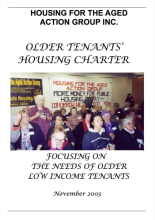
2003 100 tenants attended our AGM to endorse HAAG’s Older Tenants Housing Charter and accept a report called Older Australian’s Experience Living in Insecure Tenancies. HAAG also produced a report called ‘Older Tenants Experience Living in Insecure Tenancies’ that documented the wider impacts of the threat of homelessness and relocation on older people.
2004 In conjunction with the Victorian Public Tenants Association, HAAG held a forum called Back to the Future at ACMI, Federation Square. Attended by 200 people, talks and films depicted the fear that affordable housing is heading back to the days before the Housing Commission where older people had to rely on private landlords for their housing.
2005 HAAG held two significant forums: A Housing is a Health Issue regional forum in Benalla, and a Caravan and Residential Park Residents Statewide Forum, with a report launch by the Minister for Consumer Affairs in 2006.
2007 HAAG presented a major submission to Consumer Affairs’ Residential Accommodation Strategy that aims, amongst other plans, to provide improved security of tenure for older people living in residential parks.
2008 HAAG held two major forums: Ageing In Place? on the struggles faced by older people in the private rental market, held at the Melbourne Town Hall; and Caravan Parks or Villages? on the changing landscape of caravan and residential parks held at ACMI in Federation Square, Melbourne.
2009 HAAG conducted a major statewide consultation with older people living in caravan and residential parks that was compiled into a report to advise the State Government on the need for law reform to support this form of accommodation as an emerging form of retirement housing. This culminated in the passing of the new Part 4a of the Residential Tenancies Act in 2010 that specifically addressed the needs of this group.
2010 HAAG introduced two major enhancements to our services: 1. HAAG restructured its housing and homelessness services to better address the increasing vulnerability of many of the 40,000 older Victorians living in the insecure private rental market. The Older Persons Housing Options Information and Referral Service provides a vital service access point between vulnerable older renters at risk of homelessness, the community links where they may present with their problem, and housing services that provide appropriate responses tailored to their needs. 2. HAAG obtained additional funding from Consumer Affairs to establish a Retirement Housing Information and Support Service that assists vulnerable older people living in low income retirement housing.
2011 HAAG held a national forum called Ageing on the Edge—Older People at Risk of Homelessness. The event was attended by over 200 delegates and its aim was to highlight the latest research and to hear from the community sectors’ perspective on housing and homelessness problems faced by low income older people in Australia. An outcome of the day was a commitment by the sector to form a coalition of organisations to work towards developing an older persons housing strategy.
2012 opened its service “Home at Last” which provides a Victoria wide central contact point for older people who are at risk of homelessness. The service assist older people who live in insecure, unsafe or inappropriate housing and provides early intervention strategies that encourage people to plan ahead for their housing options. The service was funded by the Department of Human Services.
2015 the Home at Last campaign was an urgent and desperate attempt to save the service from closure when it looked like the Government funding may be cut. We rallied the support of our members and friends and in the end the Home at Last Service was committed as a project with ongoing funding. We are indebted to the supporters of this campaign and so thankful that we can continue the work we do for older people at risk of, or experiencing homelessness.
2015 HAAGs Home at Last service won the Victorian Homelessness Achievement Award for Excellence in Ending Homelessness Among Older People.
2015 National Project funded by the Wicking Trust established to campaign for and support the establishment of services for older people in other Australian States and Territories, releasing state-based research reports for Victoria, NSW, Queensland, WA, SA and Tasmania.
2018 The Home At Last Service is expanded to cover the Barwon South region, encompassing Geelong, Colac and Warrnambool.
2019 Aged Care System Navigator pilot project initiated to support older people in housing stress access Aged Care services.
2020 HAAG launches the report ‘At Risk’ identifying 405,000 older women at risk of homelessness in Australia and holds a major national forum, featuring prominent Federal politicians and older women with a lived experience of homelessness.
2021 A rural outreach service is established in the Goulburn Hume region of Central Victoria with support from the Ian Rollo Currie Foundation.
2021 Working with local partners, the HAAG supports the establishment of a Housing Older Women’s Support Service in Queensland.
2022 HAAG’s second ‘At Risk’ Forum is attended by hundreds of people in the lead up to the May Federal Election.
2023 the Federal Aged Care System Navigator and Assistance with Care and Housing (ACH) projects are restructured to become CareFinder. HAAG becomes a care finder in the north-west, Western and Mornington regions of Victoria, and continues to provide state-wide intake to the care finder program, as per our previous ACH role.
2023 HAAG launches a significant national report ‘Ageing in a Housing Crisis’ at Parliament House in Canberra with a delegation of 8 older women and 3 researchers, hosted by Parliamentary Friends of Housing. State-based reports based on ten years of census data demonstrating the worsening housing crisis for older people are launched in NSW and Queensland with local partners.
2024 HAAG secures funding to re-establish its tenancy support program. We launch another significant national report 'Not Poor enough, not rich enough: older people falling through the housing assitance eligibility gap', focussing on the "missing middle" - older people with small amounts of savings rendering them ineligible for public housing. HAAG is instrumental in achieving legislative amendments to the Residential Tenancies Act to improve residential parks, and the Retirement Villages amendment Bill is introduced to Parliament following a damning series of media reports featuring HAAG's clients and members.
Listen to Bernie Duff, one of HAAG's first paid workers, talking about the early days of HAAG
Listen to Joan Doyle and Maureen Donnolley, early members of HAAG, about housing activism in the 70's and 80's
Listen to Jeff Fiedler and April Bragg talk about the history of housing activism at HAAG
Listen to April Bragg talk about public housing activism, then and now
Listen to Jeff Fiedler and April Bragg talk about the housing activism of long-time HAAG member Carmel McMennemin
Housing for the Aged Action Group Inc 1st floor, Ross House, 247-251 Flinders Lane Melbourne 3000. Telephone 03 9654 7389 or “Home at Last ” 1300 765 178

 "There is nothing like staying at home for real comfort."
- Jane Austen
Authorized by Fiona York, Housing for the Aged Action Group 247 Flinders Lane Melbourne 3000